An SEO audit is the fastest way to understand why a site isn’t growing in terms of traffic and where its next problems are hiding. It’s the natural starting point for any serious SEO initiative, whether you’re launching a new website or trying to recover stalled traffic.
Search & organic have changed dramatically in recent years. AI-generated summaries, conversational interfaces, and rich SERP features now influence how users discover information, while platforms like ChatGPT, Gemini, and Claude increasingly shape research and purchasing decisions.
Because of that shift, a modern SEO audit can’t focus only on rankings. It needs to evaluate how your site performs across the entire search ecosystem.
In this guide, I’ll walk you through the framework I use today, the tools that speed up analysis, and a complete checklist you can apply to your own site.
Table of Contents
What Is an SEO Audit?
An SEO audit is a complex evaluation of how well a website can be discovered, crawled, indexed, ranked and converted by search engines and users. It analyzes technical SEO foundations, on-page optimization, content quality, internal linking, backlink profiles, site performance and user experience to uncover what is limiting organic visibility and growth.
In 2026, a modern SEO audit also considers how pages appear in AI-driven search results and conversational discovery platforms, making it a strategic exercise rather than a simple technical checklist. THis is what we call GEO (generative search optimisation).
What tools do you need for an SEO Audit?
Running a proper SEO audit requires more than intuition, it depends on data from multiple sources that reveal how search engines crawl your site, how users interact with pages, and where visibility or revenue is being lost. A strong SEO audit toolkit combines first-party platform data with diagnostic software that surfaces technical errors, content weaknesses, authority gaps, and performance bottlenecks.
Rather than relying on a single platform, experienced auditors use a small stack of tools that each answer a different question about site health and search performance.
At minimum, your SEO audit should be supported by tools in these categories:
- Search engine performance platforms
Used to analyze impressions, clicks, indexing status, crawl errors, and query-level visibility. – Google Search Console, Microsoft Bing Webmaster Tools - Website crawling software
Scans your site the way search engines do to uncover broken links, redirect chains, duplicate pages, missing metadata, orphan URLs, and internal linking issues. – Screaming Frog, Sitebulb - Page speed and user-experience testing tools
Identify Core Web Vitals problems, mobile usability errors, layout shifts, and performance bottlenecks that affect rankings and conversions. – Google PageSpeed Insights, WebPageTest - Keyword and content research platforms
Reveal search demand, ranking gaps, content cannibalization, topical coverage, and opportunities for new or refreshed pages. – SemRush, Ahrefs - Backlink and authority analysis tools
Evaluate link quality, lost links, anchor text risk, and how your authority compares to competitors. – Majestic, Semrush - SERP feature and AI-visibility trackers
Help assess whether your pages appear in featured snippets, answer boxes, or AI-driven discovery systems—and where optimization is required. – Semrush, Ahrefs
If you want to understand the main differences between SemRush & Ahrefs, make sure to read our guide: Semrush vs Ahrefs: Which SEO tool is the best and why?
Many of these tools offer free tiers or trial access, which is more than enough to run a meaningful first audit. What matters most is how you interpret the data and translate findings into prioritized actions, not how many subscriptions you own.
Step 1: Define SEO goals, scope and priorities

Before opening any tools, a successful SEO audit starts with clarity around business objectives and search intent. Defining your SEO goals upfront, whether that’s increasing organic traffic, improving keyword rankings for commercial pages, driving qualified leads, or supporting revenue growth, ensures the audit focuses on outcomes rather than vanity metrics. This step involves aligning SEO performance with conversion goals, customer journeys and funnel stages so technical fixes and content recommendations directly support your desired results.
You should also determine the scope of the audit: is it a full-site technical SEO audit, a content-focused review, an e-commerce performance analysis, or a targeted evaluation of key landing pages? Clarifying scope helps prioritise resources and prevents teams from spending weeks fixing low-impact issues while high-value opportunities go untouched.
Finally, document constraints and context:
- recent migrations
- algorithm updates
- redesigns
- seasonal traffic patterns
- CMS limitations
These often explain ranking drops or indexing problems later in the process. When goals, scope, and business priorities are defined from the start, every insight uncovered during the SEO audit becomes easier to interpret, justify, and turn into an actionable optimization plan.
Step 2: Benchmark organic performance and search visibility
Once goals and scope are defined, the next step in an SEO audit is establishing a clear performance baseline. This means documenting how the site currently performs in organic search across traffic, rankings, indexed pages, click-through rates, and conversion paths. Without this snapshot, it’s impossible to measure progress or decide which optimizations will have the greatest impact.
Start by collecting data across these areas:
- Organic traffic trends — sessions, users and seasonality patterns
- Top landing pages — URLs driving revenue, leads or conversions
- Search queries and keywords — branded vs non-branded demand, ranking declines, high-intent terms
- Click-through rates (CTR) — pages that rank but underperform in SERPs
- Indexed pages — what search engines have actually included vs what you expect
- Ranking distribution — keywords in positions 1–3, 4–10, and 10+
- SERP features — featured snippets, People Also Ask results, image packs, video results
- AI discovery surfaces — early visibility in AI-generated answers and conversational search tools
- Organic conversions — leads, sign-ups, purchases, and assisted revenue
This benchmarking snapshot becomes the reference point for the rest of the SEO audit, ensuring every technical fix, content update, and CRO experiment can be tied back to measurable business outcomes.
SEO audit?
Get a personalized audit and a clear action plan to improve your rankings, organic traffic and conversions.
Step 3: Crawl the site like a search engine
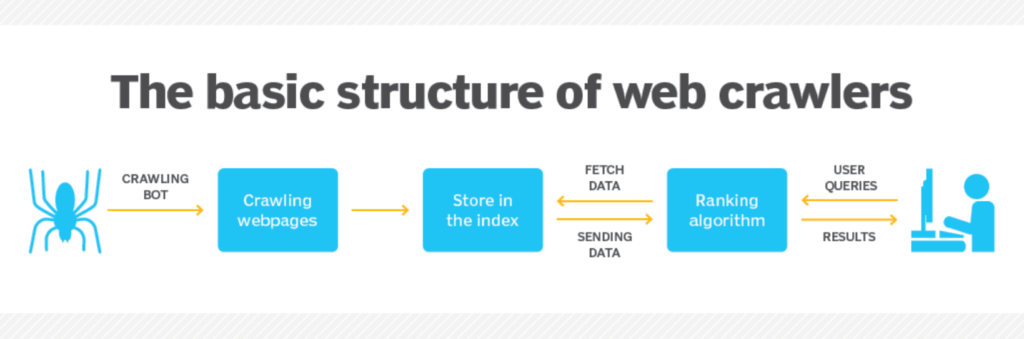
After benchmarking performance, the next phase of an SEO audit is crawling the website the way a search engine would. A crawl exposes structural and technical issues that quietly block rankings—pages that can’t be indexed, broken internal links, redirect chains, duplicate URLs, thin content, and inefficient site architecture. These problems rarely show up in analytics dashboards, but they often explain why strong content fails to perform.
A proper crawl should cover every accessible URL and segment pages by type—homepages, service pages, blog posts, categories, filters, and supporting resources—so you can spot patterns instead of isolated errors. This is also where you begin separating high-impact technical blockers from low-priority cleanup tasks.
During this stage of the SEO audit, focus on uncovering:
- Indexability issues — pages blocked by robots.txt, accidental noindex tags, or incorrect canonical URLs
- Status code errors — 404s, 5xx server errors, soft 404s, and pages that should return 200 but don’t
- Redirect problems — chains, loops, temporary redirects used permanently
- Duplicate URLs and content — parameterized pages, archives, tag pages, faceted navigation
- Orphan pages — URLs with no internal links pointing to them
- Internal-link depth — important pages buried more than three clicks from the homepage
- Missing or duplicated metadata — title tags, meta descriptions, H1 conflicts
- Thin or low-value pages — URLs with little unique content or no clear search intent
- Pagination and filtering issues — crawl traps created by category sorting and filters
- XML sitemap mismatches — URLs listed that aren’t canonical or indexable
Once you have crawl data in hand, don’t jump straight into fixing everything. Tag each issue by page type, business importance, and severity, then cross-reference it with your baseline metrics from Step 2. A broken redirect on a high-converting service page matters far more than a missing meta description on an archive page nobody visits.
This crawl becomes the technical backbone of your SEO audit—everything that follows, from indexing diagnostics to content improvements and CRO testing, builds on what you uncover here.
Step 4: Diagnose indexing and technical health
This part of the SEO audit verifies what search engines are actually indexing and why. Crawl data shows what can be discovered; indexing reports reveal what search engines have chosen to include. The gap between the two often explains ranking drops, traffic losses, and underperforming pages.
Focus first on your most valuable URLs – service pages, category hubs, and high-intent blog posts and confirm they’re indexed and eligible to rank. Pages labeled as excluded or canonicalized elsewhere frequently point to duplication problems, weak content signals, or conflicting technical directives.
Key areas to review during this step include:
- Index coverage and URL inspection — which pages are indexed vs excluded
- Canonical tags and robots directives — conflicting signals that suppress visibility
- XML sitemaps — only canonical, indexable URLs included
- Redirect behavior — sitewide chains or accidental soft 404s
- Hreflang (if applicable) — international targeting errors
- Crawl efficiency — excess low-value URLs draining crawl budget
If rankings recently declined, compare indexing trends with deployments, redesigns, migrations, or algorithm updates. Sudden spikes in excluded pages often signal technical regressions.
When this step is complete, you should clearly understand which pages are being indexed, which are being ignored, and which technical barriers are holding back your highest-value content.
Step 5: Evaluate site speed, page experience, and UX
Page speed and user experience are critical parts of any SEO audit because they affect both rankings and conversions. Slow-loading pages, unstable layouts, poor mobile usability, and confusing navigation reduce engagement and quietly drain organic revenue.
Instead of testing random URLs, focus on key templates and high-traffic landing pages to uncover systemic problems that hold back performance. Look for issues that impact crawling, frustrate users, or interrupt the path to conversion.
During this step, review:
- Core Web Vitals — Largest Contentful Paint, Interaction to Next Paint, and layout stability
- Mobile usability — tap targets, readability, form friction
- Render-blocking resources — scripts, fonts, third-party tags
- Layout shifts and visual instability
- Navigation clarity and above-the-fold CTAs
- Form usability and trust signals
Avoid chasing perfect speed scores. The goal is identifying fixes that meaningfully improve usability, indexing reliability, and organic conversion rates.
By the end of this stage, you should have a prioritized list of UX and performance improvements tied directly to your most important organic landing pages.
If you want to learn how to perform an UX audit, check out our guide: What Is a UX Audit? Process, methods and how to use the results.
Step 6: Audit on-page SEO and content quality
This stage of the SEO audit focuses on whether the right pages are ranking for the right queries—and whether those pages actually satisfy search intent and convert visitors. Strong on-page SEO combines keyword targeting, clear messaging, helpful content, and conversion-focused page structure.
Review your most important URLs for:
- Title tags and H1 alignment — do they match the primary query and earn clicks?
- Keyword cannibalization — multiple pages competing for the same term
- Intent mismatches — blog posts ranking for commercial queries, or service pages ranking for research terms
- Content depth and freshness — thin, outdated, or generic pages
- Heading structure — logical sections that answer user questions quickly
- Internal links — authority flowing from high-traffic pages to revenue drivers
- Conversion elements — CTAs, trust signals, and next steps for organic visitors
In 2026, content quality also determines whether pages surface in AI-generated answers. Pages that are clearly structured, up to date, and genuinely useful are far more likely to be summarized or cited by search systems.
The output of this step should be a short list of pages to optimize, consolidate, or rebuild—prioritized by search demand and business impact.
Step 7: Analyze internal linking and site architecture
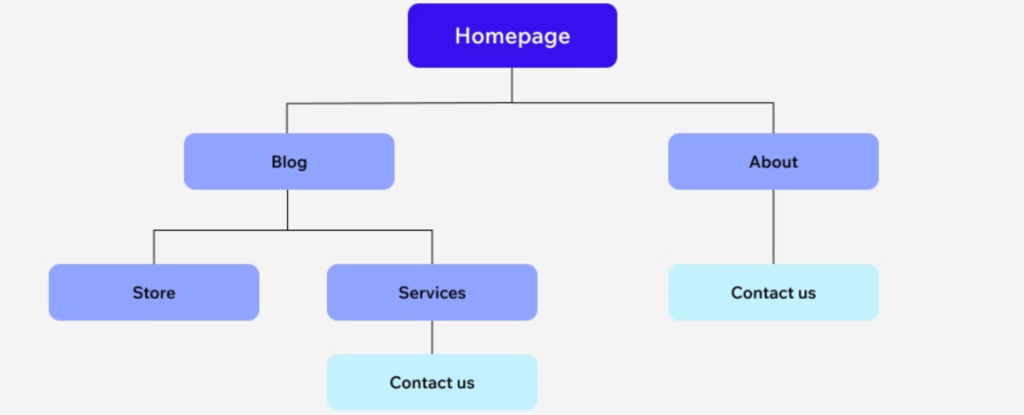
Internal linking and site architecture determine how efficiently search engines crawl your website—and which pages receive the authority needed to rank. In an SEO audit, this step focuses on uncovering structural weaknesses that prevent important URLs from performing, even when the content itself is strong.
Start by identifying pages that are buried deep in the site hierarchy or receive few internal links. High-value service pages, category hubs, and conversion-focused landing pages should be easy to reach and strongly supported by contextual links from related content.
Review the following areas:
- Click depth — are priority pages reachable within three clicks?
- Orphan URLs — pages with no internal links pointing to them
- Link distribution — are authoritative pages passing equity to money pages?
- Anchor text — descriptive, intent-aligned linking rather than generic phrases
- Navigation and footer links — do they reinforce key topics or dilute focus?
- Topic clusters — pillar pages connected to supporting articles
Well-structured internal linking also improves user experience by guiding visitors toward relevant next steps and conversion points.
The outcome of this step should be a clear architectural map and a list of linking improvements that strengthen topical authority, concentrate ranking signals on priority pages, and support organic growth.
Step 8: Review backlinks and authority
Backlinks remain one of the strongest ranking signals in SEO, which makes link analysis a critical part of any audit. This step evaluates the quality, relevance, and risk profile of your backlink portfolio—and how it compares to competitors that consistently outrank you.
Instead of chasing raw link counts, focus on whether links come from authoritative, topically relevant domains and whether they point to the pages that actually drive conversions. Many sites accumulate links to blog content while commercial pages remain under-supported, creating an authority imbalance that limits growth.
During this stage of the SEO audit, analyze:
- Link quality and relevance — topical fit, editorial placement, domain trust
- Lost and broken backlinks — reclaimable authority
- Anchor text distribution — natural vs risky patterns
- Deep links vs homepage links — whether important pages receive equity
- Competitor link gaps — domains linking to rivals but not to you
- Toxic or spam signals — patterns that warrant caution
Be conservative with disavows. Most sites don’t need them unless there’s clear evidence of manipulation or manual-action risk.
The output of this step should be a prioritized link strategy: pages that deserve more authority, links worth reclaiming immediately, and realistic outreach targets based on what already works in your niche.
There are multiple tools that can help with reviewing your backlinks. Two most popular ones are Semrush & Ahrefs, and understanding the main differences between them is crucial.
Step 9: Prioritize fixes and build an SEO roadmap

An SEO audit only creates value if its findings turn into action. After reviewing technical health, content quality, internal linking, UX, and backlinks, the final step is consolidating everything into a clear, prioritized optimization roadmap tied to business outcomes.
Instead of shipping fixes in random order, score every issue by impact, effort, and risk. Problems that block indexing, suppress high-intent pages, or damage user experience usually rise to the top, while cosmetic improvements drop down the list.
Your SEO roadmap should include:
- The issue — what’s broken or underperforming
- Affected URLs or templates
- Recommended fix — technical, content, or UX
- Expected impact — traffic, conversions, revenue
- Priority level — quick win vs strategic project
- Owner — developer, content team, or SEO lead
Separate the plan into two layers: quick wins that can ship in weeks and larger initiatives like site architecture changes, content consolidation, or template rebuilds that require deeper collaboration.
This roadmap becomes your execution blueprint and measurement framework—allowing you to track whether technical fixes, CRO experiments, and content upgrades actually produce organic growth.
Conclusion: Turning an SEO audit into sustainable growth
A modern SEO audit is no longer a one-time technical exercise. In 2026, it’s a strategic growth process that connects crawlability, indexing, content quality, site architecture, authority, and user experience into a single revenue-focused system.
By benchmarking performance, crawling your site, diagnosing indexing issues, improving speed and UX, upgrading on-page content, strengthening internal links, evaluating backlinks, and prioritizing fixes through a clear roadmap, you move from surface-level optimization to compounding organic growth.
The companies that win in search today are the ones that treat SEO as an ongoing discipline, not a reactive cleanup task and it integrates technical improvements with CRO, UX and content strategy.
If you want a consultant-led SEO audit that focuses on traffic and conversions, start with a focused review of your site.
Common questions about SEO audits
An SEO audit is a systematic evaluation of a website’s health, content, technical setup, and search visibility. It helps you uncover issues that prevent your site from ranking higher, allows you to prioritise fixes, and ensures your site aligns with current search engine best practices.
Best practice is to perform a full SEO audit at least once a year, plus after major site changes like redesigns, migrations, or periods of traffic decline, since search engines and algorithms evolve constantly.
Popular tools for auditing include Google Search Console, Screaming Frog, Ahrefs, SEMrush and PageSpeed Insights — each helping you evaluate technical issues, keyword performance, crawl errors, and page speed — all vital components of a thorough SEO audit.
Audits typically find problems like broken links, duplicate content, slow page speeds, missing meta tags, crawl errors, and poor mobile performance — all of which affect your search rankings and user experience.
If conducting a full SEO audit feels overwhelming or you want expert results faster, you can book a professional audit with me. We analyse your site with industry-grade tools, diagnose issues you might overlook, and provide a clear, actionable roadmap to SEO growth.
Get a personalized audit and a clear action plan to improve your rankings, organic traffic and conversions.